The Discovery Crisis: Why Owned Content Is No Longer Enough
Recent studies reveal startling statistics: zero-click searches are approaching 70% of all Google queries. The decline in organic click-through rates (CTR) is alarming, with a drop of 61% when AI Overviews are present. As a result, brands are facing a Discovery Crisis.
By Hayden Hollis
The Discovery Crisis: Why Owned Content Is No Longer Enough
In today's rapidly evolving digital landscape, the rules of engagement have fundamentally shifted. Search engines, once traffic drivers for brands, have transitioned into answer engines. This transformation means that brands aiming for success in 2026 must rethink their strategies. As Hayden Hollis, founder of DropPR.ai, aptly puts it, "The brands that win in 2026 aren't publishing more — they're getting cited where the answers are written."
The Zero-Click Search Phenomenon
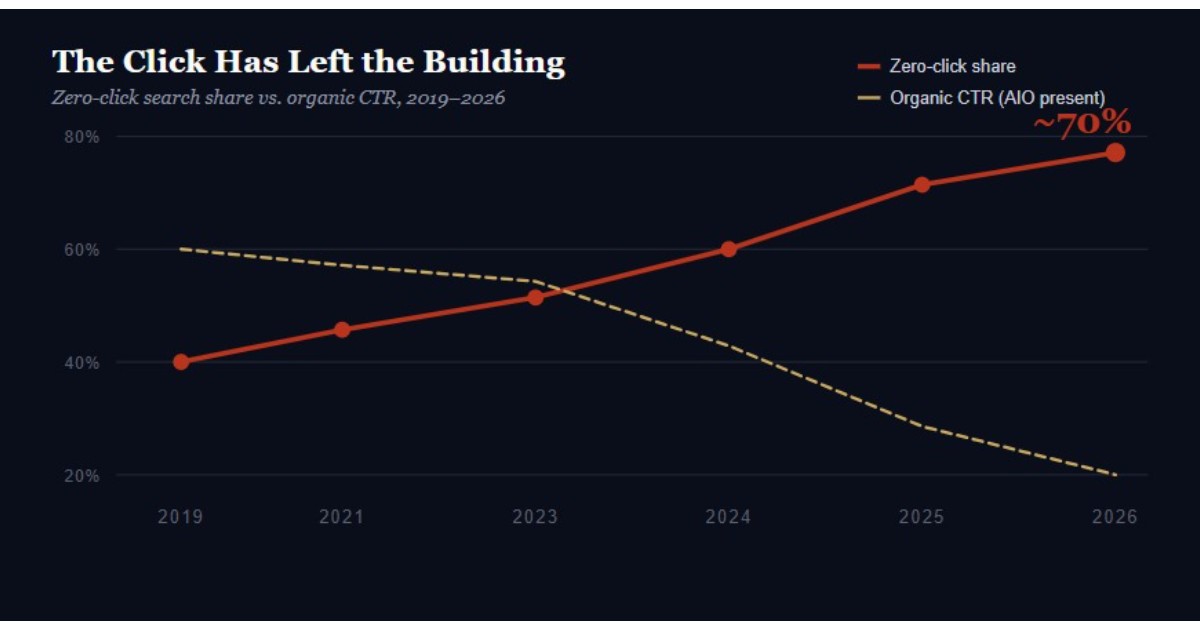
Recent studies reveal startling statistics: zero-click searches are approaching 70% of all Google queries. The decline in organic click-through rates (CTR) is alarming, with a drop of 61% when AI Overviews are present. As a result, brands are facing a Discovery Crisis.
70% of Google searches end without a click.
61% decline in organic CTR with AI Overviews.
38% year-on-year drop in Google referral traffic to publishers.
The Shift in Digital Marketing
Three significant changes between 2024 and 2026 have disrupted the traditional digital marketing playbook:
AI Overviews now dominate SERPs, severely impacting organic CTR.
Tools like ChatGPT are generating billions of searches weekly, changing how users discover content.
Brands cited in AI responses are no longer the same as those ranking on Google's first page.
“Digital PR can be more
impactful for SEO than technical optimization.” — John Mueller, Google
Introducing Performance PR
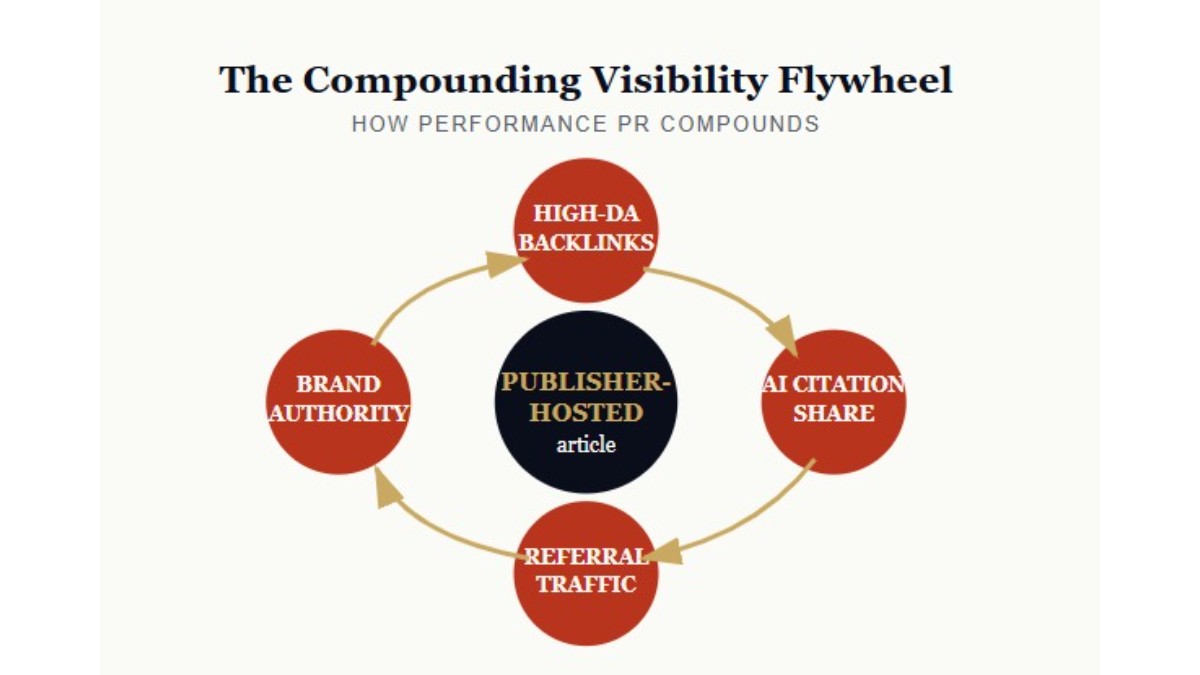
In light of these shifts, Performance PR has emerged as a new model. This approach holds public relations to the same accountability standards as performance marketing, focusing on measurable outcomes rather than traditional metrics like impressions or AVE.
Key Metrics of Performance PR
Authoritative third-party citations that AI engines surface.
High-domain rating (DR) backlinks that enhance organic rankings.
Trackable referral traffic that converts into leads.
Instead of simply publishing on your own domain, Performance PR emphasizes placing editorially-written articles on high-authority media sites. These articles not only highlight your expertise but also include links to your content, effectively bridging the gap between owned and publisher-hosted content.
Owned Content vs. Publisher-Hosted Articles
While owned content has been a staple of digital marketing, it is no longer sufficient in 2026. Here’s a comparison of the two approaches:
Dimension Owned Content Publisher-Hosted Article Editorial Control Complete Subject to publisher editorial standards Credibility Signal Brand-as-source Third-party validation SEO Authority Internal link equity only High-DR external backlink AI Visibility Frequently ignored Routinely cited Audience Distribution Your existing traffic Publisher's engaged readership
Why Owned Content Alone Is Failing
There are four critical reasons why owned content is failing brands in 2026:
AI Search Dominates Discovery: Users are increasingly relying on AI for answers.
Zero-Click Reality: A significant portion of searches end without clicks.
E-E-A-T Signals: External validation is now crucial for rankings.
Distribution Decay: Owned content has a short discovery lifespan.
“The math suggests ten mentions on authoritative, niche-relevant sites can outweigh one high-authority backlink from an irrelevant source.” — Memorable Design
The Performance PR Playbook
To adapt to this new landscape, brands can follow a three-step Performance PR execution model:
Identify your citation gap.
Create high-quality, editorially-credible content.
Distribute through a high-authority publisher network and track results.
Conclusion
In a world where owned content is no longer enough, embracing Performance PR is essential. By focusing on high-authority placements and measurable outcomes, brands can ensure they are cited, not ignored.
Hayden Hollis
Head of Growth Marketing · DropPR.ai
Hayden Hollis writes about content distribution, digital PR, SEO, AI search, and creator marketing. His work focuses on how brands and creators can extend the reach of their content beyond social media and improve visibility across search engines, news publishers, and AI-powered discovery platforms. He regularly covers strategies related to earned media, audience growth, authority building, and the evolving role of AI in online discovery.