Why the Press Release Died — and What the Performance PR Era Is Replacing It With
The press release survived 120 years and lost commercial relevance in 24 months. The economics broke, the metrics broke, and the AI engines that now mediate discovery stopped trusting it. Here is what comes next.
By Hayden Hollis
In 1906, Ivy Lee — the publicist for the Pennsylvania Railroad — wrote what is generally credited as the first modern press release after a fatal train accident in Atlantic City. The format, which Lee called a "Declaration of Principles," was elegant in its design: a one-page, journalist-ready document that gave reporters a verified version of events. For 120 years, this format defined corporate communication. In 2026, it stopped working.
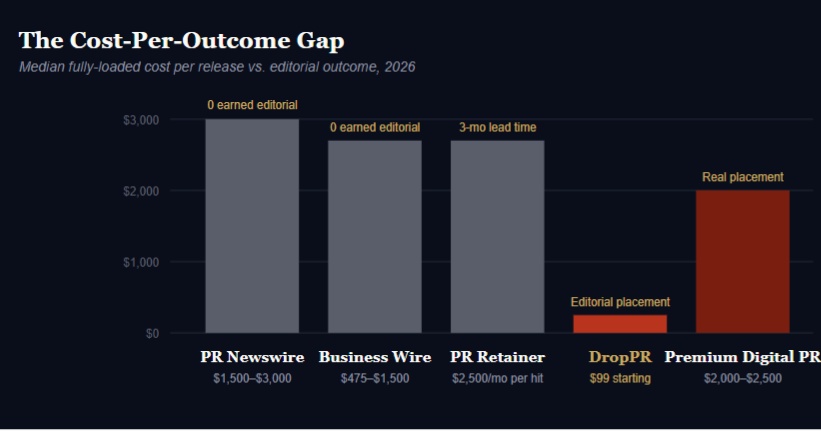
This is not a sentimental observation. It is an economic one. A 1,000-word national release with two images on PR Newswire now costs over $3,000 after add-ons — and the typical outcome is syndication to a long tail of low-DR financial aggregator sites that no buyer, journalist, or AI engine treats as authoritative. The system that worked for a century has not been killed by an upstart competitor. It has been killed by the fact that the surface area it serves — journalists reading wire feeds — has structurally collapsed.
The question for any marketing leader writing a 2026 budget is not whether to spend less on press releases. It is whether to spend on them at all.
$3,000+
fully-loaded cost of a national PR Newswire release with standard add-ons
2.5/5
PR Newswire's Trustpilot rating despite enterprise heritage
~25%
share of AI-cited links coming from journalistic sources — not paid wire
What the Wire Used to Do — and Why It Stopped
The wire's value proposition was simple: pay once, and your news reached newsrooms simultaneously. In a world of finite journalist attention and analog distribution constraints, the wire was infrastructure. Editorial pickups followed because reporters needed the wire to know what was happening.
Three structural changes have unwound that bargain.
Newsrooms shrank. The journalists the wire was designed to reach have been steadily disappearing for fifteen years. The 270,000+ journalist relationships PR Newswire markets in its pitch deck overstate functional reach by an order of magnitude — most of those addresses correspond to roles that no longer exist, beats that have been consolidated, or general-assignment desks that auto-discard sponsored content.
The audience moved. The reader of business news in 2026 does not subscribe to a wire feed. They get news from AI summaries, newsletter operators, X, LinkedIn, podcast hosts, and creators with substantive subject-matter focus. The wire reaches none of these efficiently.
The signal value evaporated. Google's algorithm explicitly down-weights press release links as a ranking signal. Muck Rack research confirms that most links cited by AI tools are unpaid editorial coverage. Wire distribution produces neither the SEO authority nor the AI citation share that justifies its cost.
The AVE Delusion
For decades, the PR industry sold a metric called Advertising Value Equivalent — the notional dollar value of earned media if it had been purchased as advertising. AVE survived because it generated a number large enough to justify the retainer. It did not measure outcomes. It measured surface area.
The Barcelona Principles, first published in 2010 and updated in 2020, explicitly rejected AVE as a valid measurement standard. The industry largely ignored the guidance because no replacement had the same satisfying largeness. That changed when zero-click search made trackable referral traffic, AI citation share, and conversion attribution measurable in ways AVE never was.
What CMOs now want — and what their CFOs are starting to demand — is a media line item that returns the same kind of data the rest of the marketing stack returns: dollars spent, outcomes generated, attributable revenue. Performance PR is the model that fits that demand. Press release distribution is not.
Wire vs. Performance PR: The Decisive Differences
DimensionPress Release / WirePerformance PRContent FormatSelf-authored corporate announcementEditorially-written feature articlePlacementSyndicated finance portals + auto-aggregatorsHigh-DR publisher with editorial credibilityAuthority SignalDiscounted by Google; ignored by LLMsEditorial link + brand mention; cited by AI enginesCost Model$1,500–$3,000+ per release, no outcome guaranteePer-placement, tied to publisher tier and audienceMeasurementImpressions, pickups, AVEReferral traffic, citation share, conversionsSpeed24–48 hours to wire3–10 days to publicationAudienceWire-feed monitors, search syndication botsPublisher's engaged readership + AI training corpora
The "Compliance Instrument" Problem
There remains one legitimate use case for wire services: regulated disclosure. Public companies filing material announcements through Business Wire or PR Newswire are using the wire as a compliance instrument, not a discovery channel. The wire's value here is procedural — timestamped distribution, SEC/EDGAR integration, broad simultaneous availability — not commercial.
Industry analysis increasingly positions PR Newswire and its peers as compliance infrastructure rather than performance channels. That is an accurate framing. Treating compliance distribution as marketing was always a category error; the AI search transition has merely made the error too expensive to continue tolerating.
What Replaces the Press Release
The replacement is not one thing. It is a three-part stack.
The Owned Newsroom. A structured, schema-marked, frequently-updated brand newsroom that functions as the canonical source AI engines reach for when they need factual information about you. Not a blog. A newsroom — with author bios, dated entries, structured data, and a permanent URL pattern.
The Editorial Placement. Publisher-hosted articles on properties with real editorial credibility, real audiences, and real AI citation history. This is the unit of work that drives the flywheel — backlinks, citations, branded search, conversions.
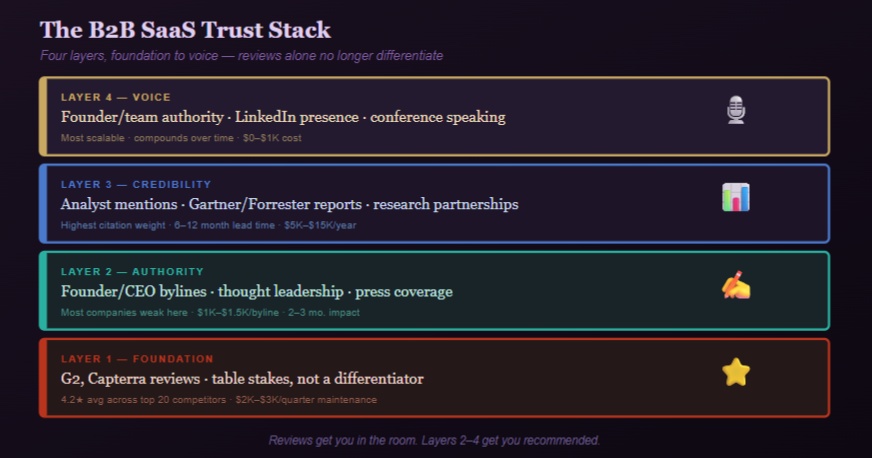
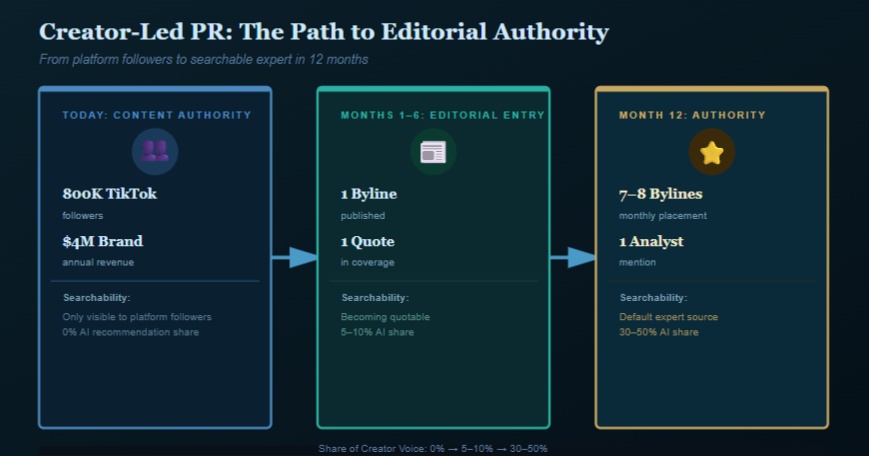
The Creator Endorsement. Independent voices with substantive audiences — newsletter operators, podcast hosts, vertical YouTube channels — increasingly carry more authority signal than legacy publications for their niches. The brands that integrate creator endorsements into their PR stack are seeing the strongest compounding.
Wire distribution can still play a supporting role as an accelerant — but only after the editorial placement exists and the newsroom is structured. Wire first, content later is the inverted order that no longer produces results.
Further Reading · Curated by the DropPR Editorial Desk
Do Press Release and Newswire Services Help With AI Visibility?PR.co
PR Newswire Pricing 2026: $350–$9,500 Per Release ComparedPressonify
PR Newswire Review 2026: Features, Pricing, and AnalysisSignal Genesys
Top Newswire Services for Press Release Distribution in 2026Barchart
Link Building & Digital PR Strategy: The 2026 Authority GuideOutpace SEO
Stop Paying for Distribution. Start Paying for Outcomes.
One placement on the publishers AI engines cite — for less than the cost of a single wire release.
DropPR replaces the wire model with editorially-written publisher articles, structured for AI citation, tracked for conversion. No retainers. No "membership fees." No syndicated aggregator sites. Real editorial outcomes, per-placement pricing.
The Replacement Stack — What You Get Per Placement
Editorial-grade article written to publisher standard ($1,200 value)
Placement on a high-authority licensed media property ($800 value)
Branded backlink with UTM tracking and conversion attribution ($400 value)
Full structured data, schema, and AI-extractable formatting ($350 value)
30-day performance dashboard: traffic, citations, revenue ($300 value)
Zero annual membership. Zero hidden fees. ($249 saved)
Total stack value: $3,299 Charter pricing from $99.
No subscription. No retainer. No annual membership. Pay per placement.
Data Sources Referenced
Pressonify (April 2026) · PR Newswire fully-loaded release pricing: $1,500–$3,000+ with standard add-ons.
Barchart Top 10 Newswire Comparison 2026 · PR Newswire Trustpilot rating 2.5/5; pricing tiers.
Muck Rack (cited via PR.co, Dec 2025) · ~25% of AI tool citations come from journalistic sources.
Signal Genesys (March 2026) · Industry analysis positioning legacy wires as compliance instruments.
Gini Dietrich, Spin Sucks · PESO® Model framework for integrated PR.
Barcelona Principles 3.0 (2020) · Industry rejection of AVE as a valid measurement standard.
Hayden Hollis
Head of Growth Marketing · DropPR.ai
Hayden Hollis writes about content distribution, digital PR, SEO, AI search, and creator marketing. His work focuses on how brands and creators can extend the reach of their content beyond social media and improve visibility across search engines, news publishers, and AI-powered discovery platforms. He regularly covers strategies related to earned media, audience growth, authority building, and the evolving role of AI in online discovery.